Go to Northcott main site

All Posts By

team

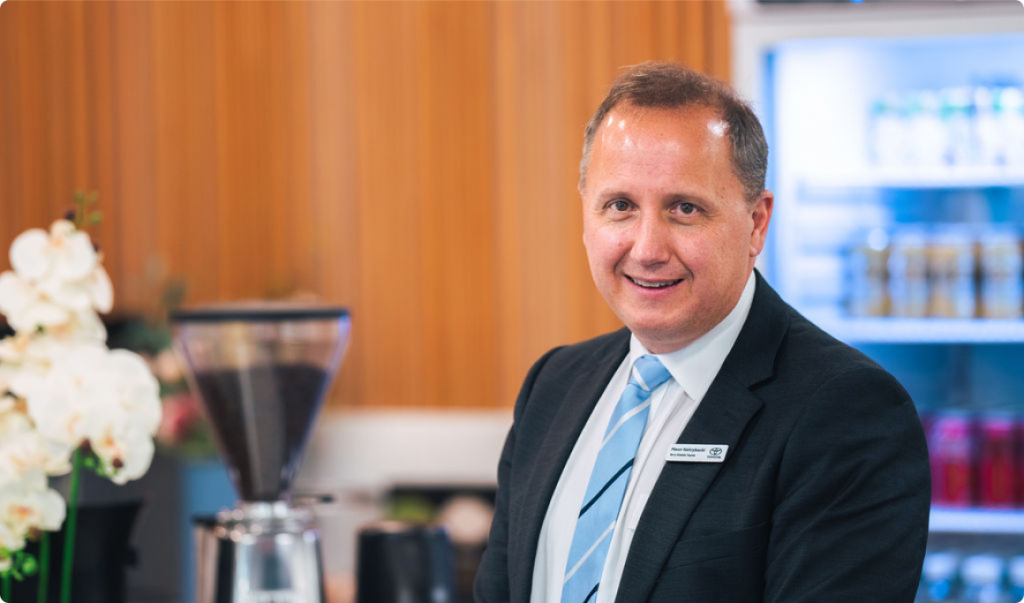
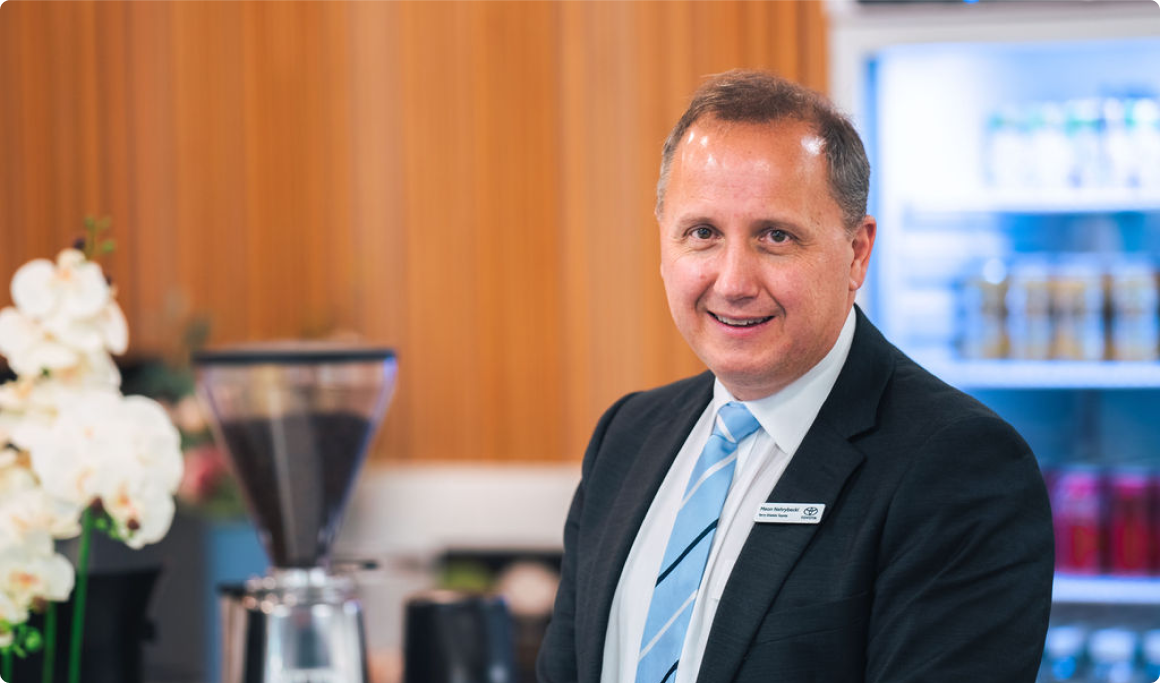
Meon Nehrybecki, Principal Dealer at Terry Shields Toyota in Parramatta, in a suit and tie, smiling at the camera.

Committed to his community

By Our supporters
Meon Nehrybecki, Principal Dealer at Terry Shields Toyota in Parramatta

Meon Nehrybecki, Principal Dealer at Terry Shields Toyota in Parramatta

Donor Profile

Committed to his community

Meon Nehrybecki, Principal Dealer at Northcott's corporate partner Terry Shields Toyota Parramatta, shares our vision of a more inclusive society for all. He’s committed to seeing his business become an even bigger and better supporter of Northcott.

When Meon became the Principal Dealer at Terry Shields Toyota in July 2021, he wasn’t aware of the services and supports provided by Northcott. It wasn’t long however, before the long association between Northcott and Terry Shields Toyota caught his attention.

“My philosophy is that a portion of your profit needs to go back to your community, because the community supports your business. So when I heard about the longstanding partnership with Northcott I thought it sounded fantastic and said, ‘we’ll obviously continue with that’,” he explains.

Under Meon’s leadership, Terry Shields Toyota has four pillars for its community support – not-for-profit, special needs, local schools and local sport. Northcott fits the bill as a local not-for-profit, but it is our work supporting people with disability to achieve their potential that has Meon most interested.

The partnership

The Parramatta dealership has been a Northcott Corporate Partner since 2018, but collaboration between the two organisations goes back far longer. Terry Shields Toyota has been supporting Northcott for more than 15 years, sponsoring and attending several of our previous fundraising activities including Gala Dinners (as the pre-dinner drinks sponsor), Charity Golf Day and ‘Walk With Me’ awareness raising initiative.

Staff have also been involved in corporate volunteering opportunities at our inclusive carnivals for children with disability. In more recent years, the dealership has been a generous Matching Hero for our Giving Day fundraising initiative in 2020 and 2021 to support children with disability. Their contribution, along with other Matching Heroes, formed the portion of funds that ensured donations from the community on the day were doubled.

Sponsorship from Terry Shields Toyota has also helped to fund equipment, resources and items needed for our Café Thanks a Latte training program. This unique program gives participants in our Vocational Skills service that chance to learn hospitality skills in a café-setting run within Northcott’s offices. With support from Terry Shields Toyota, we were able to expand this program to multiple Northcott sites across Sydney and develop specific staff training and program materials.

Inspired by first-hand experience

At a visit to Northcott after the COVID-19 lockdown in 2021, Meon was lucky to experience Café Thanks a Latte first-hand.

“Participants training in the café in the Parramatta office came to ask us for our order and made us a coffee. I thought it was beautiful. I think everyone has an opportunity to work within the community no matter what, so I really like how Northcott is supporting people by developing their skills for various roles,” he says.

The interaction inspired Meon to think creatively about other ways Terry Shields Toyota can support Northcott and children and adults with disability.

“My goal is to grow our partnership with Northcott. I’ll be guided by Northcott’s Fundraising team as to how we can do that, but I’d like to see where our staff can engage more with Northcott such as in workshops or working bees at Northcott offices now that the restrictions of COVID are behind us.

“I’d like to expose our staff to what Northcott does so they can gain an understanding of some of the challenges people with disability and their families face. I also want to further explore how we can collaboratively support that work,” he says.

“I would love to see how automotive retailers within the Parramatta area can come together to support Northcott. My goal is to bring us all together so that collectively we can support something bigger and better for Northcott.”

Thank you Meon and all the staff at Terry Shields Toyota for your generous support of Northcott and people with disability!
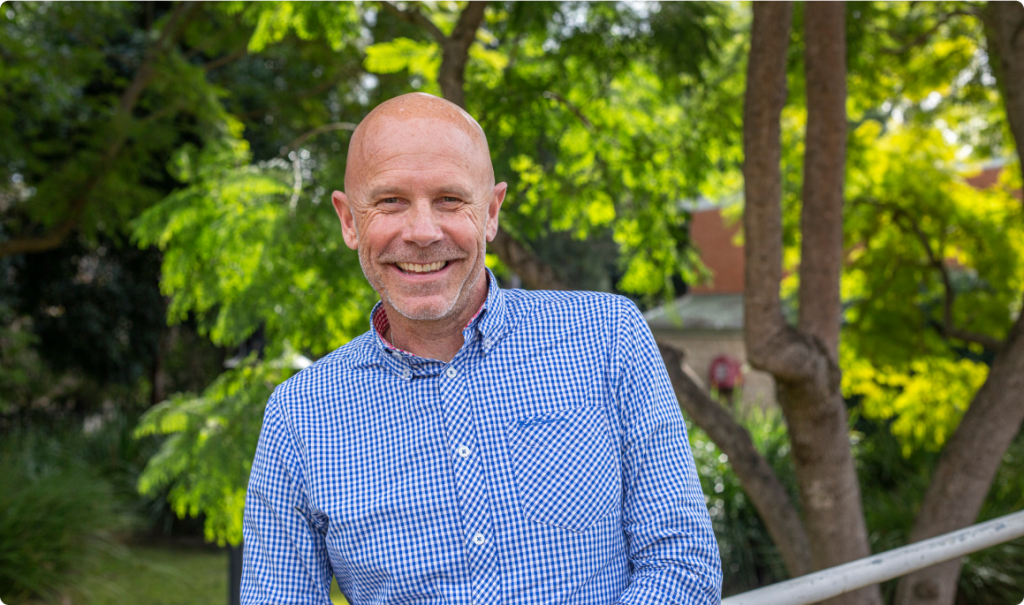
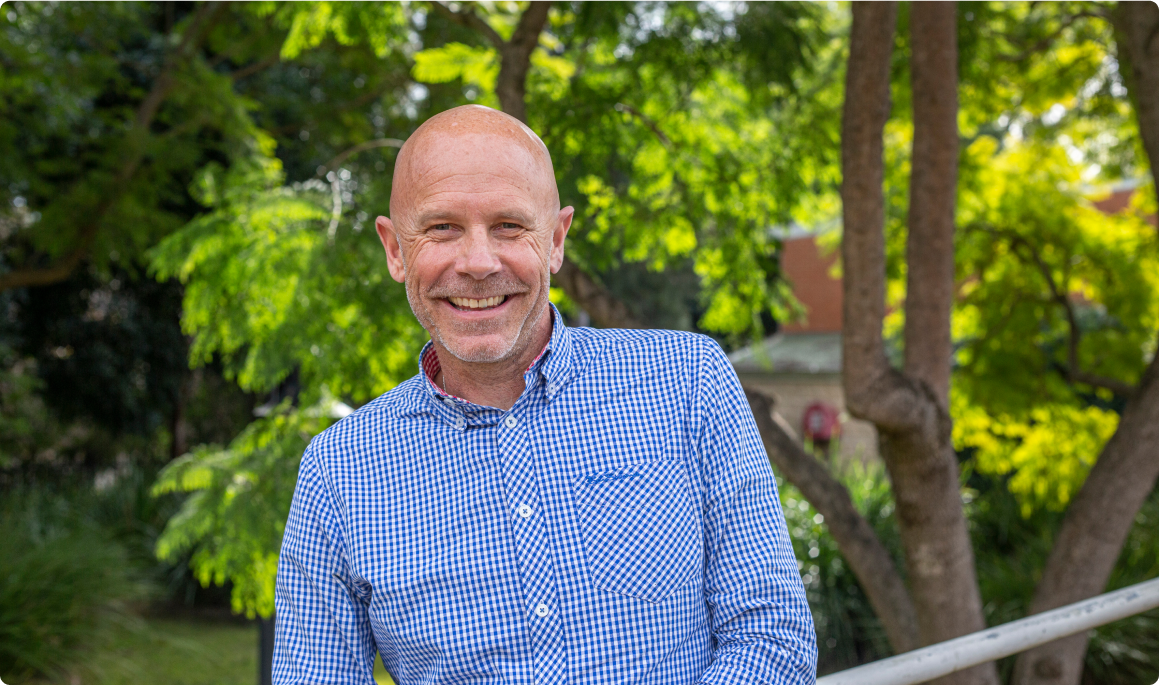
A man in a blue checked shirt is in a garden, looking at the camera, smiling.

A positive career path

By Our people
Aaron

Aaron

Positive Behaviour SupportStaff

A positive career path

“It’s a role where there are a lot of ups and downs, but that means when you get those little wins, they feel even more special.”
– Aaron Payne, Positive Behaviour Support Practitioner

An innovative solution to a staffing shortage issue provided Northcott employee, Aaron with the chance to develop his career. It’s also enabling Northcott to reach people with our Positive Behaviour Support service.

Aaron is one of Northcott’s eight new behaviour support practitioners, all of whom have been trained by their peers through our in-house pilot trainee program. Aaron started as a support worker in one of Northcott’s supported living homes in 2020. With vast experience in the disability sector, Aaron was looking for a new direction to take his career.

“I felt my skills were at a level where I could assist more, but I didn’t want to return to managing a disability home,” he explains.

When he heard about the opportunity for Northcott support workers to train to become positive behaviour support practitioners, the timing couldn’t have been better.

Northcott colleagues, Aaron and Suzie

Northcott Behaviour Support Practitioners, Aaron and Suzie

About the traineeship

In February 2021, Aaron and his fellow trainees headed back to the classroom, studying full-time at Northcott to gain their new qualification. The program, which was developed by an internal facilitator and senior members of Northcott’s Behaviour Support team, included interactive workshops, online learning, observation sessions, mentoring and self-directed learning.

Aligned with the NDIS Commission’s capability framework, all aspects of behaviour support were covered, from restrictive practices, policies and procedures through to plan writing and observation skills. Each trainee was also paired with a senior practitioner to observe and work alongside.

“Being in a group and working collaboratively assisted me immensely. Listening to each other’s experiences and being mentored and guided along the way gave me skills and knowledge to take into the complex role.

“The training involved going into homes to observe residents, ask support staff questions and review behaviour support plans. There were also opportunities to observe occupational therapists, speech pathologists and staff working in Northcott’s vocational and life skills services,” Aaron explains.

As the year progressed, the trainees began to take a more hands-on role, assisting experienced practitioners with their caseload and putting their new skills and knowledge into practice.

By mid-year, Aaron was assessed to be “provisionally suitable” to deliver services as a NDIS approved behaviour practitioner and ready to begin his new role!

On the job

“I’m now supporting six residents from our homes and two younger community-based participants, where I am working with teachers and parents,” Aaron says.

One of the young people Aaron is supporting has been challenging, but equally rewarding.

“This teenager has ADHD, mild intellectual disability and presents with a few common behaviours of concern which represent his diagnosis, and are detrimental to his physical, mental and emotional wellbeing. Emotional regulation skills and improving his speech and gross motor skills so he can participate in social activities and have the confidence to build and establish peer relationships, have been at the forefront of my work with him,” Aaron says.

“Initially, with a few obstacles, it was challenging, but we’ve got a really good relationship now. Although it’s been a slow burn, I’ve seen progress,” Aaron explains.

Having been in the role for some time Aaron has reflected on the career change.

“I’m getting a lot of satisfaction. I think I’ve got a lot to offer and I enjoy helping and supporting people. There is so much emphasis on behaviours within the disability sector and often the people we support are labelled negatively due to this. I get a great sense of achievement in being an integral part of the process moving forward to eradicate this stigma.

“When you see those little sparkles in a person’s eyes, a smile, a verbal greeting, or a gesture to a picture on their communication board, it’s really satisfying.”

As a registered provider of Positive Behaviour Support, our qualified practitioners support children and adults with disability to have fewer behaviours of concern and live an improved quality of life. We have 18 practitioners, ranging from Core to Proficient and Advanced, who provide NDIS funded supports to approximately 240 people with disability. We also provide internal supports to other Northcott teams, such as capacity building and vacancy management supports.

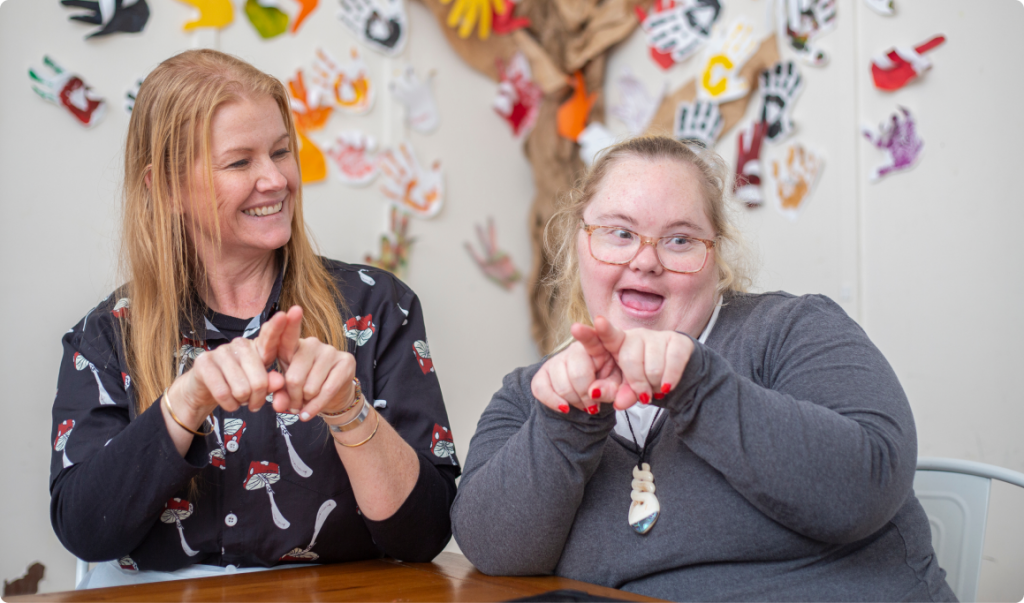
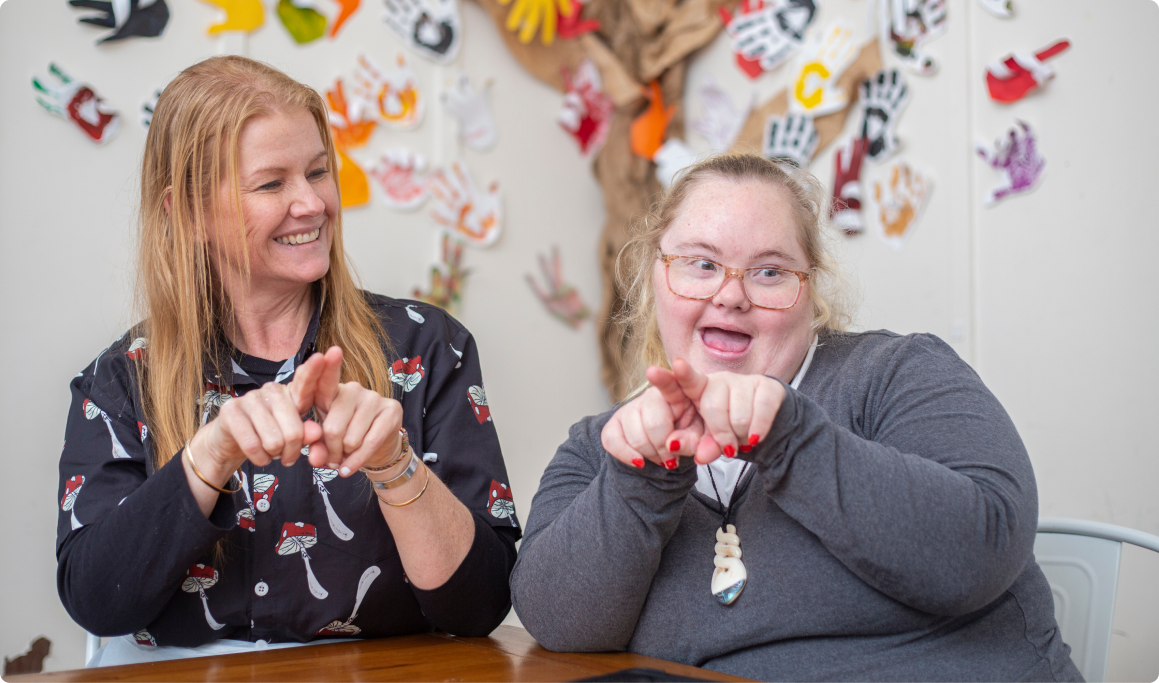
A woman with orange hair, Rachel, wearing a black shirt with red and white mushrooms on it is sitting next to and looking at a younger woman with Down Syndrome wearing glasses. Both women are doing Key Word Sign and smiling. On the wall behind the women is a wall with a picture of tree on it and colourful hands prints stuck to it.

Finding a rewarding role

By Our people
Everyday Life SkillsStaff

Finding a rewarding role

Download descriptive audio transcript

“Brave is the Northcott value that means the most to me. I try to avoid conflict but being brave for our participants is something that’s really easy.”
– Rachel Ralph, Support Worker

Rachel started at Northcott in Ballina around six years ago, moving from hardware retail to disability support work to fulfil her desire to help other people.

With no prior experience working in the sector, or close relationships with people with disability, the switch was daunting.

“I remember feeling like a deer in headlights in my first couple weeks. I thought, ‘I can’t do this. I don’t know how to do this. This is so overwhelming’,” she recalls.

Now Rachel can’t imagine doing anything else.

“I love it. I love that I get to work with people who are so genuine.”

Rachel’s role

Rachel is a support worker, primarily in Ballina’s centre based Everyday Life Skills service, supporting participants to meet their goals, take part in activities and learn new skills.

“I’m happy to assist the people we support achieve their goals, be their best, or do whatever is needed to get them through the day. Whether that’s supporting them with behaviours, personal care or just being the best person they are,” Rachel says.

She is an instrumental member of the team, earning the trust and respect of both the participants and her fellow staff.

“Rachel is always thinking outside of the box and creates a safe space for our participants to share their dreams with her. She then makes those dreams small achievable steps. She is always thinking ahead and breaking down barriers that may be in the way of participants achieving their goals,” says Kahli Milner, Service Manager in Ballina.

One of the things Rachel is proud to have achieved during her time at Northcott is to help form a customer committee at the Everyday Life Skills service.

After realising that one of the participants enjoyed organising events and activities, Rachel worked with him to establish the committee and encourage customer-led activities. Drawing on her experience as a Scout leader, Rachel and the participant developed a way to plan and create meaningful experiences for the group.

“Northcott and my coordinator backed me to do this and now we have a service where customers have input into their activities and what they do each day,” she explains.

While being part of the customer committee was an amazing achievement, Rachel says she is most proud of the trust she builds with participants.

“I’m really proud when a participant needs personal care and they will only let me support them. When somebody at their most vulnerable trusts me enough to let me assist them that gives me the most pride in my day.”

Rachel and Martika

Rachel and with Everyday Life Skills participant, Martika

A passionate advocate

Standing up for what she believes has always been important to Rachel.

“I genuinely love to be able to advocate for the people we support. We have a customer who loves getting his nails done and getting a little blush. His family didn’t want this, but Northcott backed me 100% to support him to do this because it was his choice.

“To work for a company that feels this way is so empowering to me. That’s what I love about Northcott, our values and the people we support,” Rachel says.

“Seeing how happy he is [with his painted nails] and knowing that I not only have the ability to support him, but also the backing of my company, that’s what I love about my job.

“I have seen so many goals achieved and been able to support people in so many ways – that’s both amazing and rewarding.”

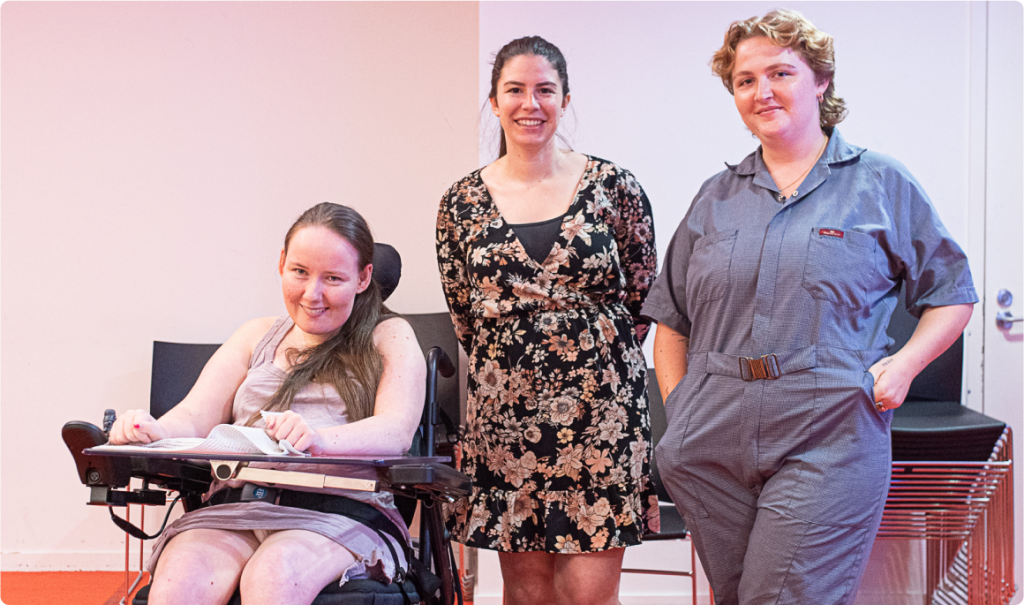
A woman is sitting in a motorised wheelchair with a table attached. Two other women stand next to her. Everyone is smiling.

Supporting positive relationships

By Innovative Projects
Screenwriter Emily Dash, Northcott staff member, Alicia and film director, Claudia Bailey

Screenwriter Emily Dash, Northcott staff member, Alicia and film director, Claudia Bailey

Sexuality and Relationship Education

Supporting positive relationships

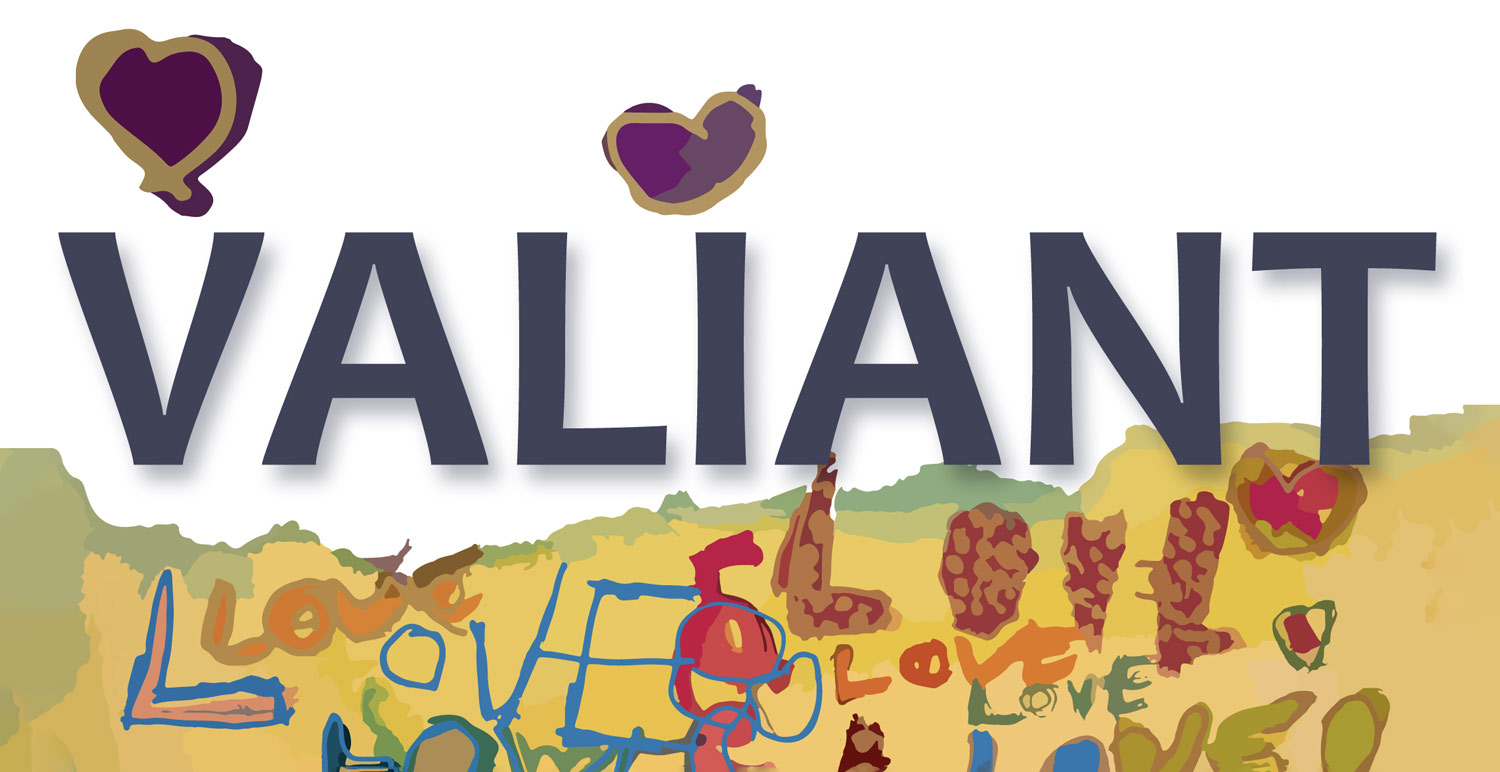
Education around relationships, consent and sexual health for people with disability is difficult to find. Northcott proudly partnered with Bus Stop Films to create a film-based educational resource to fill this gap.

Inclusive film organisation Bus Stop Films identified the need for a way to support young people with disability to build safe and respectful relationships and understand consent. The idea came from observing young people with disability navigate new relationships and friendships while participating in their filmmaking classes.

As a leading provider working in this space, Northcott had also identified a lack of accessible resources for people with disability. The two organisations joined forces to develop and make Valiant, a short film and educational guide that empowers young people with disability, while also addressing a gap in education.

The issue

Everyone has the right to intimacy and building healthy relationships, including people with disability. Yet access to education about sexual consent, relationships and dating is often limited – or worse, non-existent.

For young people with disability, the need to learn about relationships, sexuality and sexual health can be overlooked, ignored or even deemed unnecessary. In reality however, people with disability – and their parents, carers and support networks – often need extra support.

A learning tool

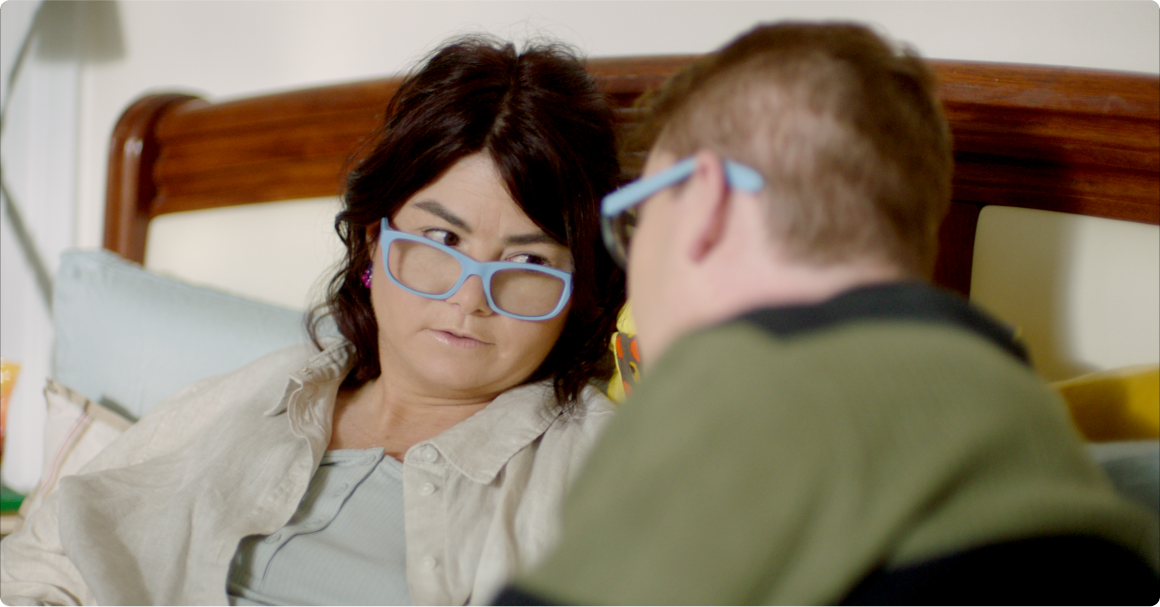
Through four heart-warming stories featuring characters who live with disability, Valiant explores the dynamics of relationships, tackling issues including breakups, sexual intimacy and first dates. Filmed by a crew comprising students with disability from Bus Stop Films, the characters in Valiant were played by people with disability.

Written by acclaimed screenwriter Emily Dash and directed by filmmaker Claudia Bailey, the content for Valiant was developed by 12 young adults with disability who participated in workshops at Bus Stop Films, supported by Northcott. The workshops explored relationship issues faced by people with disability and the challenges they face in understanding and navigating dating and sexual relationships.

To complement the messages in the film, Northcott’s Sexuality and Relationship Education team developed an educational guide to use for discussions and learning around dating and relationships after watching the film. The guide helps start conversations between people with disability, teachers, parents, carers and others in their support network. It also provides tips and advice to help people with disability and their families and carers build respect for each other, navigate relationships and better understand another person’s needs and wishes.

Actor Dina in a scene from Valiant

Actor Dina in a scene from Valiant

An actor’s viewpoint

Dina is one of the actors in Valiant, sharing the spotlight with her real-life husband, Ricky. In their scene, the couple explores the issue of sexual consent. Dina is proud to be a part of Valiant, saying, she believes the film will be useful for anyone who wants to be in a relationship and see what it’s like.

“I hope Valiant helps people with disability understand how relationships work and realise it’s not all about rushing into things. I’m pleased that [by being involved] I can help people learn about relationships and, in particular, consent,” she said.

Valiant was funded by an Australian Government Information, Linkages and Capacity Building (ILC) grant from the Australian Department of Social Services, awarded to Bus Stop Films.

Watch Valiant and download the educational guide here

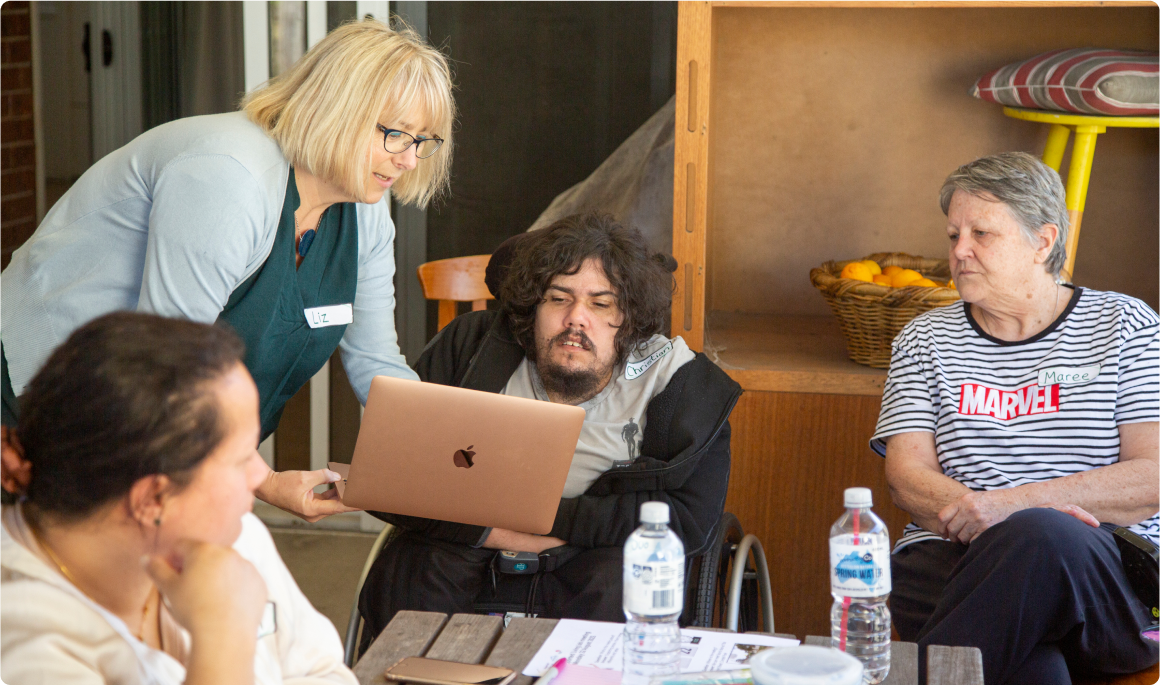
A woman is holding a pink Apple Mac Air laptop and showing it to a man in a wheelchair. Two other women either side are looking on.

Exploring inclusive governance

By Innovative Projects
Committee members Liz and Christian

Committee members Liz and Christian

HousingNI

Exploring inclusive governance

Northcott’s subsidiary, Northcott Innovation (NI) is taking a deep dive into what it takes to truly include people with complex needs and intellectual disability in a steering committee.

In 2020, NI formed the Supported Living Lab (SL/lab) to find ways to improve the quality of life of people with disability living in supported homes. The lab’s activities are guided by a unique steering committee.

“Everything that NI does is co-designed with people with disability, so we wanted to make sure our lab’s steering committee – whose role is to direct and shape the work of the lab – is a place where people with disability, characteristic of those living in Northcott’s disability housing, have a genuine seat at the table,” explains Samantha Frain, Executive Director of NI.

This meant adopting an inclusive governance approach. Residents with complex needs and intellectual disability (who represent the majority of Northcott’s supported accommodation residents) were invited to join the committee, alongside staff from NI and Northcott’s Housing and Operations teams.

“The majority of the residents on our committee have a significant intellectual disability, some are non-verbal communicators, and some have complex support requirements. This differs from typical inclusive governance which tends to mean including people who have disability that doesn’t impact their understanding and participation,” Sam says.

“The style and format of our meetings, the minutes, the papers, the conversations, and the methodologies we use, are all matched to the support requirements of every individual on the committee. Additionally, our committee has a flat governance structure, so there’s no hierarchy. Members with disability have the same committee roles and responsibilities as other members, including those who hold senior positions at Northcott,” explains Sam.

Members of the steering committee

Members of the steering committee

Inclusive practices

Due to its unique membership, the steering committee operates very differently to other committees.

To make the meetings as accessible and inclusive as possible, significant preparation takes place. The meeting agenda and minutes are developed, then simplified to include visual aids such as photos and icons.

Each committee member with disability meets with Liz, Northcott’s Inclusive Practice Manager (also a committee member) prior to the meeting. Liz supports them to understand about the committee, the upcoming meeting’s agenda and what they might like to contribute. Liz also de-briefs with each resident after each meeting. To ensure their full participation, some committee members attend with support workers who understand their personal communication methods.

The meetings are as informal and visual as possible. The group avoids using disability or organisational jargon and they break into smaller groups for discussions or activities. All members are encouraged to contribute through verbal communication, Key Word Sign and at times even drawing. With one member unable to meet in person due to their geographic location, at least one other member also attends every meeting via Zoom so that nobody feels excluded.

Although there are challenges during every meeting, Sam believes NI and Northcott are gaining important insights about how to improve quality of life within disability housing. All committee members, including those without disability, are also gaining skills and getting new experiences.

“I’m proud the committee exists and that Northcott is committed to investing in it. You can genuinely see that all committee members love being a part of it.”

Committe member Marisa and her support staff, Maree

Committe member Marisa and her support staff, Maree

What the committee means to Marisa

Marisa lives in a Northcott home in Western Sydney. She has an intellectual disability and doesn’t use speech to communicate. She is supported to participate in the steering committee by Maree, her Northcott Nurse Unit Manager. Maree shares her observations here:

“Marisa gets so excited to go to the meetings. Any talk about it, she beams with excitement – she loves it. But she is getting more than that. She’s being listened to; she’s being heard.

“After a meeting, Marisa carries a booklet with the agenda and minutes. The support staff have conversations with her about what happened. She points to pictures and she wants to interact more.

“I feel that Northcott isn’t just ticking boxes to say we’re inclusive. To me, [the steering committee] feels like we are really doing it, which is exciting.”

NI is sharing its experiences of inclusive governance in a research project conducted by Side by Side Advocacy.

Getting young people work-ready!

By Innovative Projects
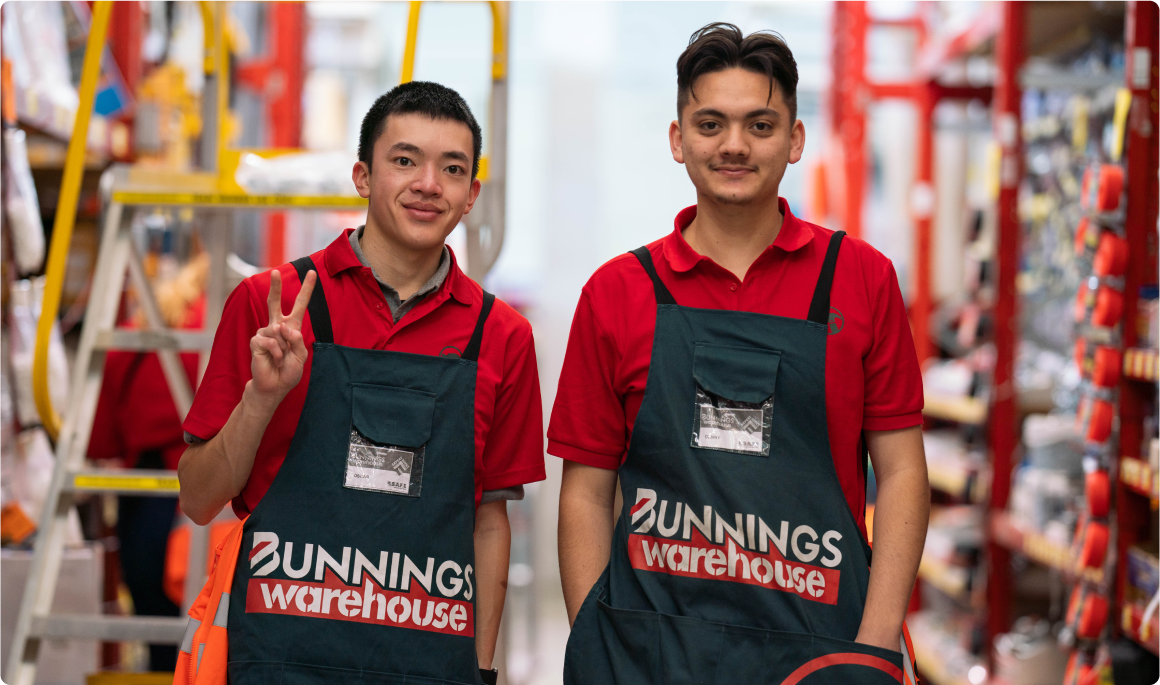
Denny and Oscar

Oscar and Denny at work experience at Bunnings

FundraisingVocational Skills

Getting young people work-ready!

With the help of Citi Foundation, we’re creating more work experience placements and job pathways for young people with disability.

Using a grant from Citi Foundation, we have employed a community engagement officer whose role is to build connections with businesses and develop work experience placements and paid employment opportunities for our Vocational Skills participants aged 17-24 years. As Northcott Community Engagement Officer, Josh Debono is also identifying sectors impacted by skills and labour shortages where there is the potential for people with disability to fill employment gaps.

“The pandemic put a complete hold on work experience and paid employment opportunities for recent school leavers coming to Northcott for job support. Before that, many organisations were hesitant to take on people with disability because of a lack of understanding about their capabilities,” Josh says.

Through conversations with businesses as well as an industry roundtable meeting, Josh is raising awareness about the abilities of young people with disability – and creating real opportunities for work experience placements.

“I talk about the individual, their capabilities and the programs we have in place to build their job-ready skills and get them prepared for independence and moving into paid employment. With increased knowledge, employers are becoming more open to the idea of taking on a young person with disability for work experience. There are also a lot of opportunities showing real promise of paid employment to follow,” he explains.

Bunnings work experience program

In June, 65 participants from 7 Northcott sites across Greater Sydney kicked off a new work experience program at Bunnings.

“Bunnings hasn’t provided work experience placements for people with disability in the past. I sent them information about our programs and what we are aiming to achieve, and they said they were keen to get on board,” Josh says. “We worked together on a program and now we’ve built an ongoing relationship with them.”

The participants are experiencing every department of Bunnings from the warehouse to working on the retail floor. Each participant is paired with a buddy who assists them. In their final weeks, they can choose an area of their interest in which to finish their work experience placement.

“So far it’s gone really well. Our customers get a shirt and apron, learn skills and they feel part of the team,” Josh says.

“I’m proud to be playing my part in building connections and new work experience opportunities for our participants. This is a great way to support them to progress their skills, while trialing different types of industries and occupations. They are so excited to be doing work experience and you can see their confidence is growing. They are proud of themselves.”

What our participants think

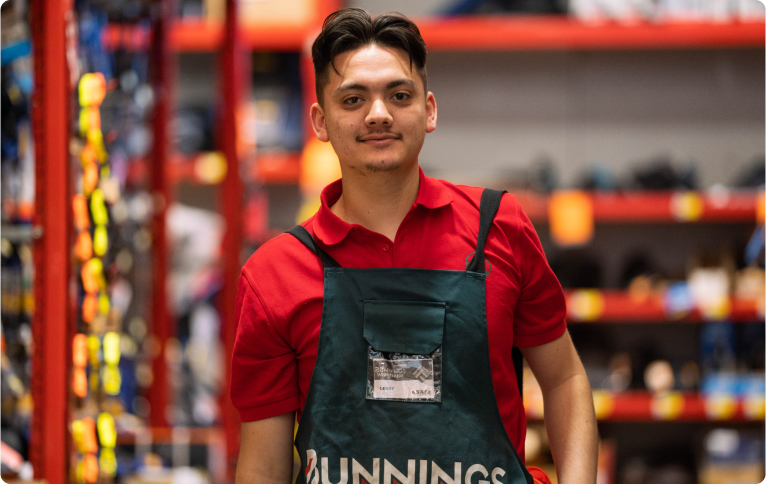
Denny

Denny

“I really like working in the tools section and helping customers and putting stock on the shelf. I also like talking with the people who work there.”
– Denny

Denny

Oscar

“I worked in the tool section and I enjoyed making it neat and tidy. I also enjoyed working in the paint section where I got to clean up a section. I enjoy making sure the prices are correct and each section I am in is neat and tidy.”
– Oscar

Outcomes

1 industry roundtable with 6 businesses attending

Initial discussions with 4 organisations about work experience and paid employment opportunities

24 participants completed or undertaking training in Responsible Service of Alcohol

Bunnings work experience program launched with 65 participants from 7 Northcott sites

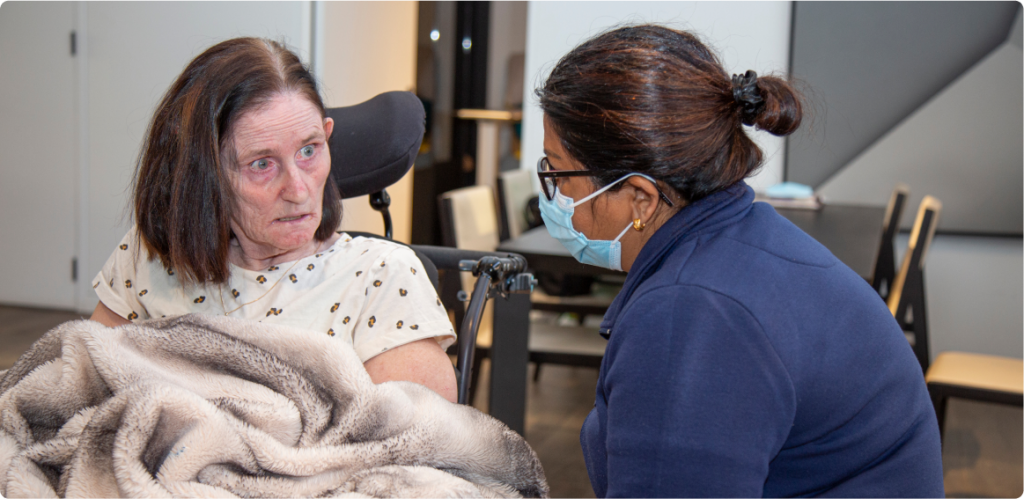
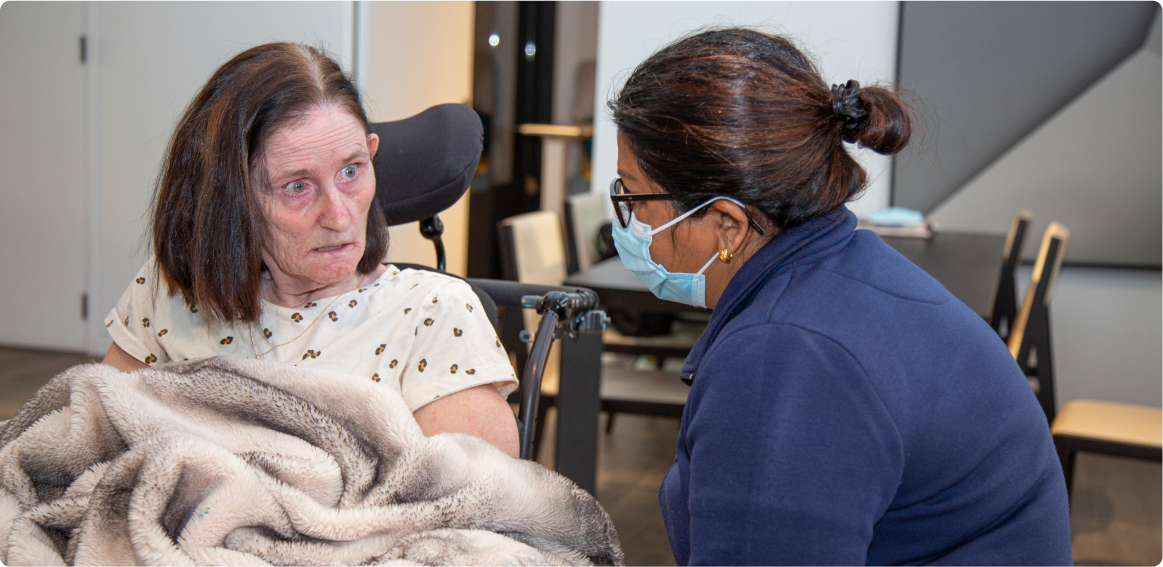
A woman is in a wheelchair and covered with a blanket. Another woman in a facemask and wearing a blue jumper is sitting next to her, wearing a face mask. Both women are looking at each other. You can see a dining table and cupboard in the background.

A house to call home

By Supporting Customers
Housing

A house to call home

Download descriptive audio transcript

We supported four residents with varied and complex needs to move into our new Oran Park home where they are enjoying an improved quality of life.

Our resident Vicky

Before Vicky moved into a Northcott disability home, she was living in an aged care facility for a long time following a stroke. Although she was looked after, Vicky had limited supports for her complex needs and rarely would get out in the community. Thanks to the opportunity to move into supported disability housing with Northcott, Vicky is now supported to do things she loves, like shopping, while also having control over other aspects of her life.

The home

Northcott’s Oran Park home was built by Specialist Disability Accommodation (SDA) provider, DPN Casa Capace and opened in 2020. The home is specifically designed for people with severe functional impairment or highly complex support needs, with automated doors, blinds and benches. Using Supported Independent Living (SIL) funding, residents of Oran Park have 24/7 support from Northcott to assist them in all aspects of their lives, from daily living tasks to administering medication, travelling to appointments or getting out in the community.

“We help our residents to have some type of independence and control in what happens in their lives,” says Alana, Northcott Service Coordinator at Oran Park.

Resident Vicky with Northcott Support Worker, Sneha

Resident Vicky with Northcott Support Worker, Sneha

Supporting the move

Vicky and her housemates were all living in different circumstances before joining Northcott. Some had been living in nursing homes, while another had experienced long term hospitalisation due to the lack of suitable accommodation.

Moving the residents into Northcott’s Oran Park home was an enormous task involving many Northcott teams, external organisations, the residents’ families and the NDIS, explains Northcott Service Manager, Ravi Bhati.

“Northcott went above and beyond to support the customers. Our Vacancy Management and Housing teams worked together to achieve the best outcomes.

“Funding was an important part of the transition and the residents’ applications were declined a few times as we were unable to obtain the required documents from the hospital or aged care providers involved. Finally, we submitted the documentation to the NDIS and were able to secure the SDA and SIL funding which made it possible for these residents to move into Oran Park,” Ravi says.

Once the funding was in place, Northcott prepared the house for each resident.

“We made sure the right supports were available and equipment arrived on time so that when the residents came, they would have a positive experience.”

Support staff were also trained in the specific support requirements of the residents, who have a range of disabilities and complex support needs.

“It was challenging and a lot of work…but we are so happy to have them here now,” Ravi says.

Positive outcomes for all

“Our residents seem to be very happy. They are receiving support as per their choice. They are in control and making choices. They are controlling how they want to live in this house.

“They feel that this is their home. They have an attachment to this house and are very comfortable living here,” explains Ravi.

Service Coordinator, Alana is particularly proud to have supported the residents to have more opportunities for community access. One resident, who hadn’t left her bedroom in the nursing home, was very anxious when she first moved into Oran Park. With support and encouragement to sit outside, then go for walks around the local streets, she slowly built up her confidence to regularly get out in the community. Another resident was also very reluctant to leave the house. With support and prompting from Northcott staff, this resident is now happy to go shopping and regularly attend mass at a local church.

“To see the residents able to do something for themselves is wonderful. My drive for coming to work each day is to help our customers reach their goals. I’m passionate about helping them maintain a quality of life,” Alana says.

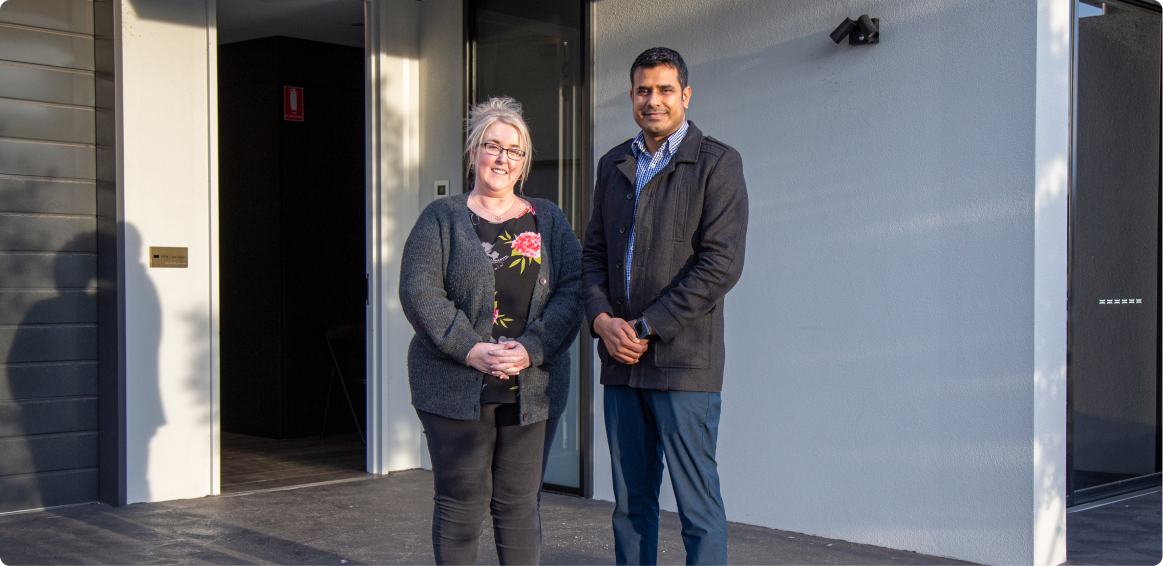
Northcott Service Coordinator, Alana with Service Manager, Ravi

Northcott Service Coordinator, Alana with Northcott Service Manager, Ravi

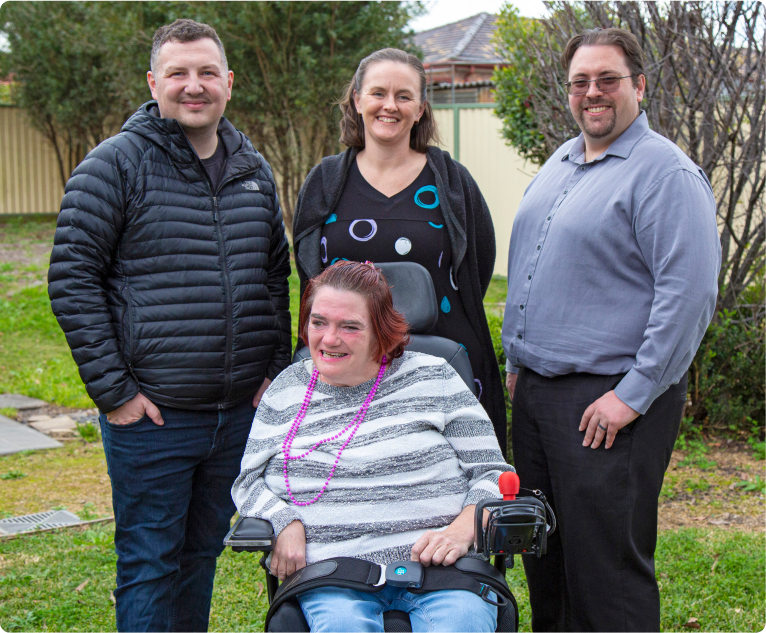
A man in a black puffer jacket, a woman in a black dress and cardigan and a man in a grey shirt are smiling and standing behind a woman sitting in a motorised wheelchair with a red joystick.

Improving Kyle’s quality of life

By Supporting Customers
Housing

Improving Kyle’s quality of life

Download descriptive audio transcript

After years of collisions in her wheelchair and frustrating repair waiting periods, Kyle is enjoying greater independence thanks to a custom-designed wheelchair joystick.

Kyle’s frustrating situation

Northcott resident, Kyle loves her independence, but for several years she has had difficulties getting around in her wheelchair. Due to her disability, Kyle has uncontrollable tremors that cause her to break the joystick on her chair. Her tremors also cause her to drive uncontrollably, often colliding with furniture and people in her path, injuring herself and others, as well as damaging her chair. Her customised wheelchair is constantly in need of repair, meaning she has to use alternative aids, including manual wheelchairs or power chairs not suitable for her needs.

“For Kyle to be out of her chair causes her to be upset. She can get frustrated, and it limits her access to the community,” explains Aaron, the Service Coordinator in the Northcott home where Kyle has lived for several years.

“I’d rather be able to do things but if they take [my chair] away I’m stuck,” says Kyle, adding that she finds her current joystick “hard to control”.

Having reached the end of the road in terms of the solutions his team and Kyle’s therapists could offer, Aaron turned to Northcott Innovation (NI), a subsidiary of Northcott that uses human-centred design to find solutions for the challenges faced by people with disability.

“Our priority was to aim for a higher quality of life [for Kyle] by enabling her to drive her chair more independently,” explains Samantha Frain, Executive Director of NI.

Aaron, Sam, Michael and Kyle

Aaron, Sam, Michael and Kyle

The solution

NI identified that Kyle needed a different way to control her wheelchair. The team reached out to UTS Rapido, who were able to bring their engineering and design-thinking skills to the project.

With NI coordinating involvement from Kyle, the support staff in her home, and her therapists, the Rapido team was able to observe Kyle and understand the issue. This gave them the information they needed to start developing some concepts, before settling on a low-tech magnetic toggle solution. With magnets as the central feature of the joystick, the team from Rapido measured the power of Kyle’s tremors and matched it to various magnetic variations, testing prototypes internally along the way.

“We’ve developed a joystick, which intentionally comes apart when it’s overloaded,” explains Dr Michael Behrens, Principal Delivery Manager at the UTS Rapido.

“When you push the joystick harder than you’re supposed to, it breaks away and then the chair comes to rest. When everything’s settled down, you can just clip it back on again.”

After hours of testing and countless prototypes, (not to mention many months of COVID-19 lockdowns), Michael was ready to deliver a 3D printed solution to Kyle in June.

The NI team and Kyle’s support staff were on hand to see Kyle’s reaction after Michael fitted the new joystick. Despite a few false starts, Kyle quickly worked out how to control the joystick, realising it intentionally would come apart, but is easily reattached. She was soon zipping around her home independently. It was special moment for everyone involved.

What the team thought

“I’ve known Kyle a long, long time and through ups and downs. I know this issue with the wheelchair constantly gets her frustrated and quite upset. To see something new that will give her the opportunity to go out and spend more time outside and do the things that she wants to do almost brought me to tears.” – Aaron Morgan.

“It was amazing. I’m super pleased that the solution worked for Kyle. Kyle seemed really excited, Aaron and the house team seemed excited, the NI team’s excited, Michael was excited!

“I think that we’ve got a solution that will mean Kyle can be more independent in the weeks, months, years ahead, which would be great. She can get back out in the community, get to the club, which is one of her favourite things and places to go, and live a great life.” – Samantha Frain.

“It’s always great when we see a solution come together, but in particular, this time I got a great sense of satisfaction because of the vast benefit that it can have for Kyle and her quality of life.” – Dr Michael Behrens.

This project was made possible thanks to a Social Impact Grant from the UTS Centre for Social Justice and Inclusion, an in-kind contribution from Northcott Innovation and donations from Northcott donors.

A mother is sitting on a blanket with her primary-school aged son. They are looking at each other smiling and the mother is holding the boy’s hands. We can see a toy xylophone in front of the boy. It is a sunny day.

Learning more than words

By Supporting Customers
Sapana and Aahan

Sapana and her son Aahan

FundraisingTherapy

Learning more than words

Participating in the More Than Words speech therapy program gave Sapana new strategies for communicating with her son, Aahan.

Sapana’s 7-year-old son Aahan was diagnosed with level 3 autism when he was almost 3 years old. Although he has a good level of understanding, Aahan doesn’t use speech to communicate. He has accessed one-on-one speech pathology services with Northcott for around 12 months using NDIS funding.

Sapana was keen to participate in More Than Words, a training program for parents of children with autism, as a way to gain new skills for Aahan.

“I thought it might help me to use new strategies with Aahan and improve how I communicate with him in daily life.”

The experience, she says, was nothing but positive.

“Before, I felt like I was walking on the road without direction. Now I know the direction towards our goals. The course helped me to have more patience and know how to deal with my kids in so many ways.”

What is More Than Words

More Than Words is an evidence-based speech pathology program developed by The Hanen Centre. It is delivered by Northcott speech pathologists who have received specialised training and certification from The Hanen Centre.

The training focuses on developing the skills of parents of children with autism or social communication difficulties, teaching them communication and interaction strategies that can be used in the home and everyday routines and activities with their child.

The program includes small group sessions and individual consultations. Via video recordings, participants are also observed interacting with their child.

Aahan

Aahan

Positive outcomes for all

Sapana has noticed some big changes in Aahan, as a result of using strategies she learnt during the program.

“The most important thing I learnt was waiting and how to be patient. Because of that, I think Aahan is now able to go to the toilet. I waited and I didn’t force him. This is a very big thing. We are really proud of him,” she says.

“We are also interacting more with him. Nowadays Aahan doesn’t stay alone in his room; he comes to be with us and tries to play with his younger brother. When our relatives come to the home, he likes to be involved with them and play with them. He is more social now.”

Sapana also says she benefitted from hearing from the other parents.

“I liked being with the other parents. We learnt so many things from each other through the online classes. I found it very effective.”

Thank you to the Profield Foundation

Northcott was able to offer the More Than Words program to Sapana and other parents at no cost, thanks to funding from the Profield Foundation. This meant parents didn’t have to pay out-of-pocket for the training – or use a portion of their child’s NDIS therapy funding.

“Families with limited NDIS funding could participate without it impacting on access to other therapies, such as one-on-one occupational therapy or speech pathology sessions or other speech pathology goals such as communication device trials,” explains Sarah Ruming, a Hanen accredited Northcott Speech Pathologist and one of the facilitators.

“We find families are more willing to try an intensive program like More Than Words if it doesn’t impact their other therapy funding. For some, there is a perceived ‘risk’ in committing to a short program that takes a large portion of their funding, at the expense of other therapies, or that they are not sure will ‘work’ for them and their child.”

Families accessing Northcott Speech Pathology services were able to participate via a telepractice format, which allowed our Hanen-accredited therapists to reach more families.

Northcott is grateful to the Profield Foundation for their ongoing support. Their funding ensures more families are benefitting from vital therapy programs, such as More Than Words, which complement tailored one-on-one therapy.

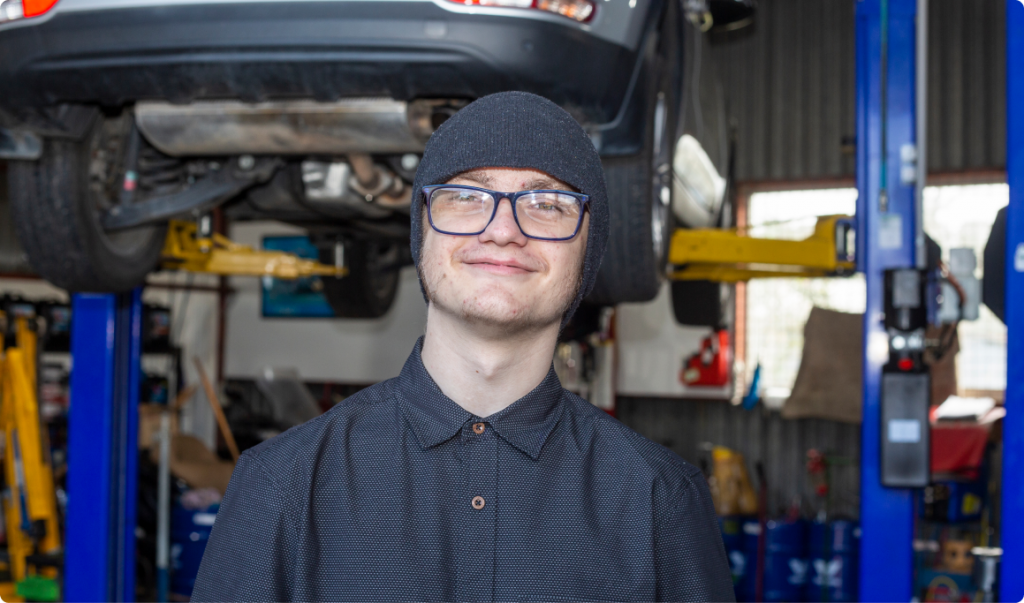
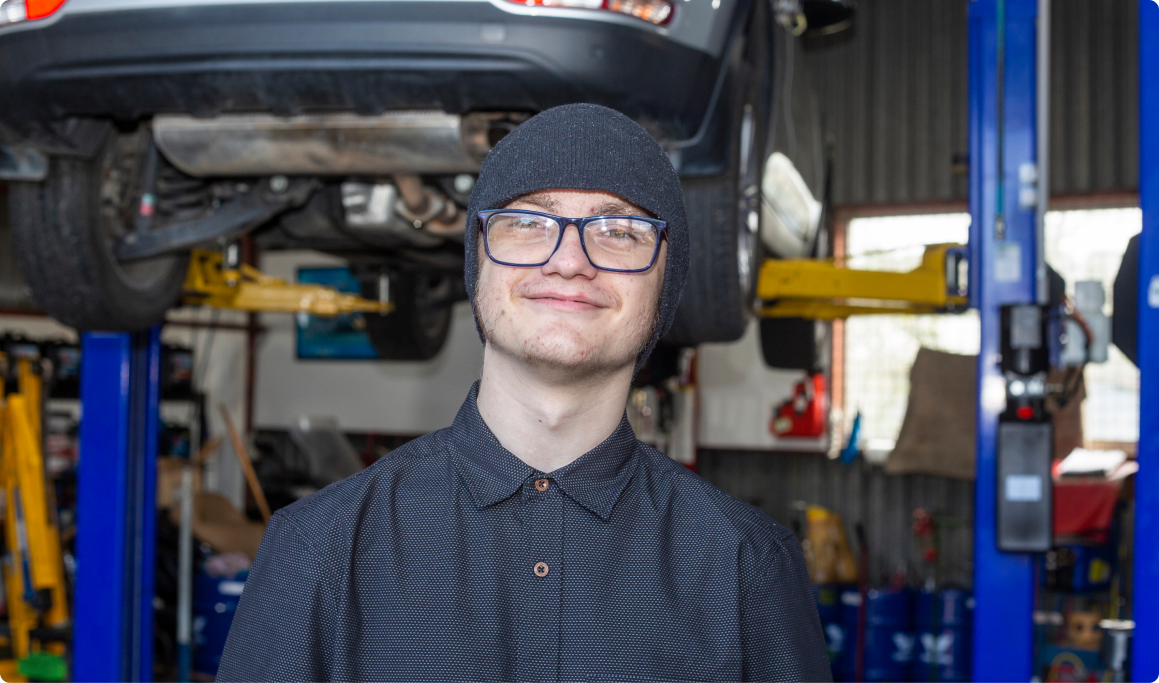
A portrait of a young man, Sean, smiling at the camera. He is in front of a car hoisted off the ground. He is wearing dark bean, collared shirt buttoned to the top and square glasses.

Building a future full of potential

By Supporting Customers
Vocational Skills

Building a future full of potential

Download descriptive audio transcript

“I’m different now. I feel a little bit more confident.”

When Sean joined Northcott Taree’s School Leavers Employment Service (SLES) in January 2020, his mother was worried about him. Sean was becoming more defiant, spending hours isolated at home, and rarely socialising with his peers.

Northcott Support Worker, Chad remembers that Sean would object to almost every task he was asked to do, keep to himself in group activities and disagree with his peers.

Two and a half years later, with Northcott’s support, Sean is more confident and has developed skills and a work ethic that is preparing him for the workforce.

Harper Moroney EC AR 2022

Sean

What Northcott did

After Sean started accessing Northcott’s Vocational Skills service, our support workers noticed activities like resume writing and job seeking skills weren’t resonating with him. Using a person-centred approach, the team adapted Sean’s program, providing one-on-one vocational skills support in his home and matching him with support workers, like Chad, who he could build rapport with.

“I started to make horse reins with Sean. He was able to earn money by selling them. That gave him a feeling of self-worth, but also value to the work we were doing with him. He realised we were trying to help him,” Chad explains.

“We started to do a lot more work in his home. We would mow the lawn, clean up the house and build that work ethic in Sean.”

Chad discovered Sean responded well to camaraderie, preferring the support workers to work alongside him rather than tell him what or how to do things.

Slowly Sean gained trust and confidence. He started to form healthy relationships with both his peers and Northcott staff. He began to play a more active role in activities, showing initiative and doing tasks without being prompted.

Sean’s work experience

After noticing Sean had an interest in repairing things, Chad approached a local Taree mechanic about work experience opportunities. Ben, owner of Protec Mechanical Repairs, was more than happy to give Sean a go. Since the end of 2021, Sean has been spending one day a week in his workshop.

“I clean different parts of cars, empty the bins and sweep. I enjoy learning about how to do new things,” Sean says.

“Ben and his team are busy but they are nice and helpful. My favourite thing is cleaning the parts.”

Ben says he has seen a lot of growth in Sean over his time in the workshop.

“When he first turned up, he was very shy and wouldn’t interact with most of our staff. Over the last couple of months, he’s grown heaps and is getting more confident. He knows all the tasks he needs to do and can do them without instruction.

“I think Sean can be proud of his self-confidence and the additional skills that he’s picked up.”

Sean’s growth

Chad is also proud of Sean’s transformation.

“Sean has gained so much confidence. He is much better at talking to people, and much more caring towards other people. You don’t have to prompt him on how to do things once he’s been taught.

“I feel that Sean is really ready to join the workforce now. He has brought a lot of self-satisfaction into my job.”

Sean also recognises changes in himself: “I’m different now. I feel a little bit more confident. I enjoy not being stuck at home all day. I’m proud to leave the house more often, even when it’s not a day I go to Northcott.”